|
|
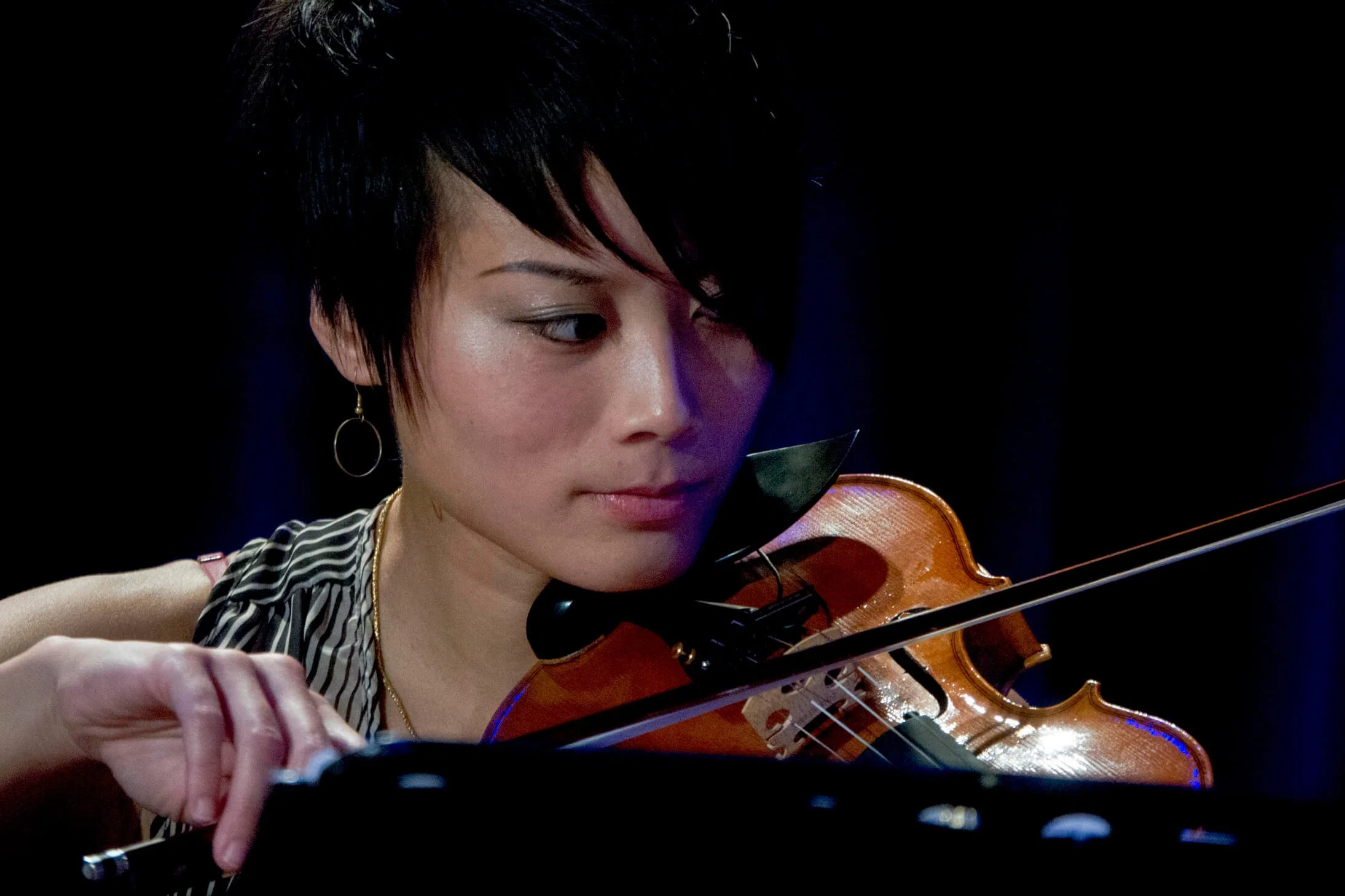
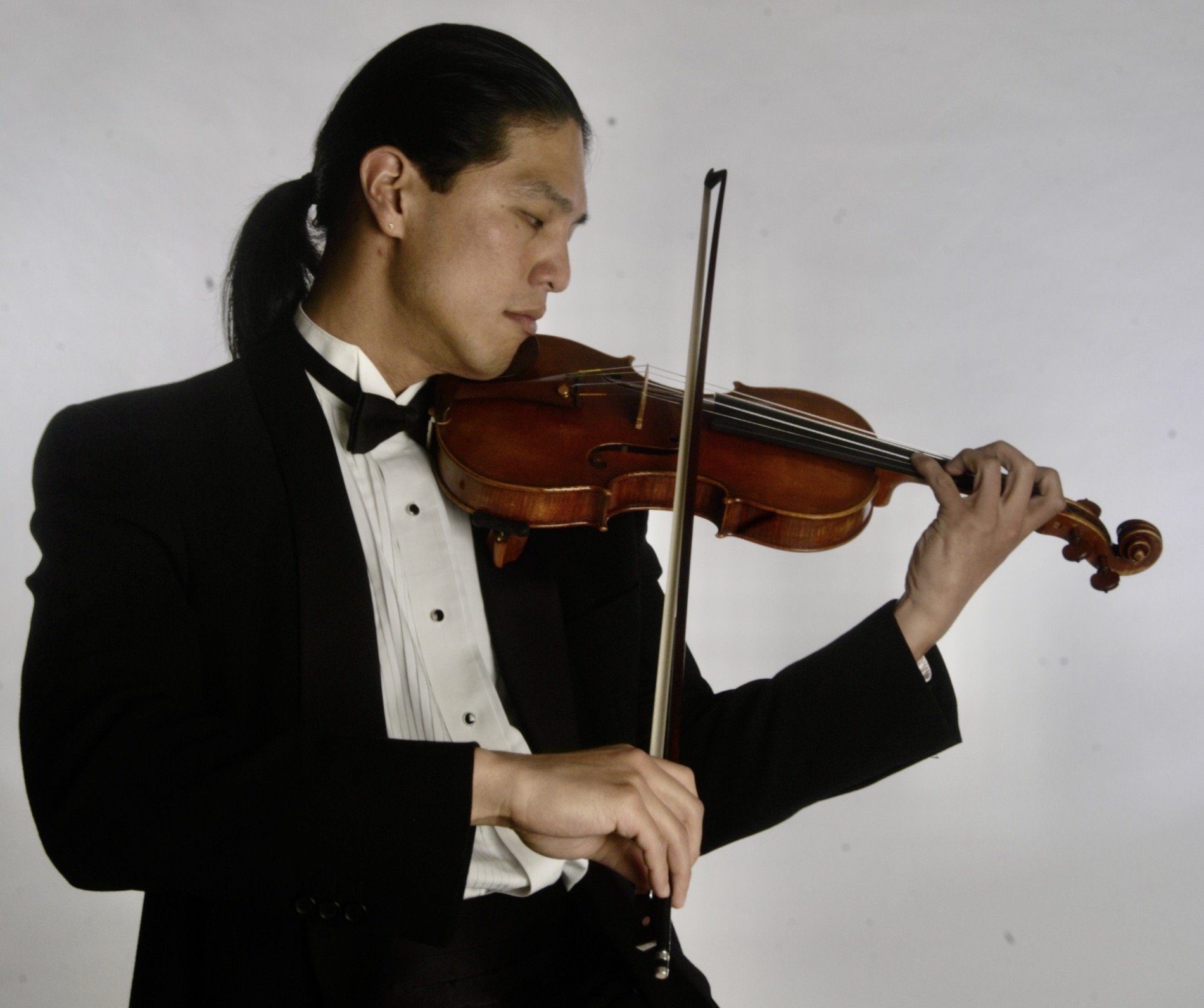
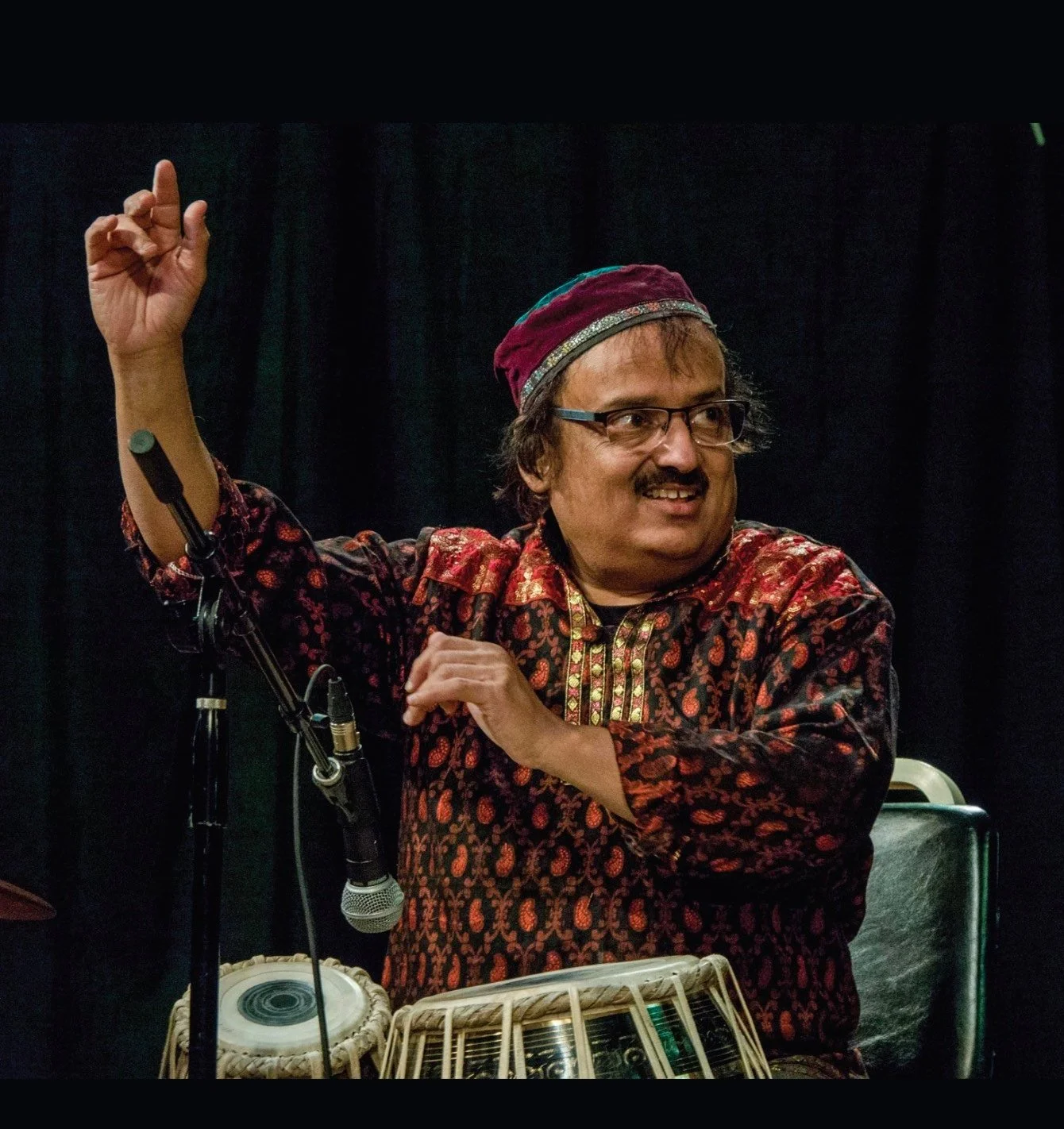
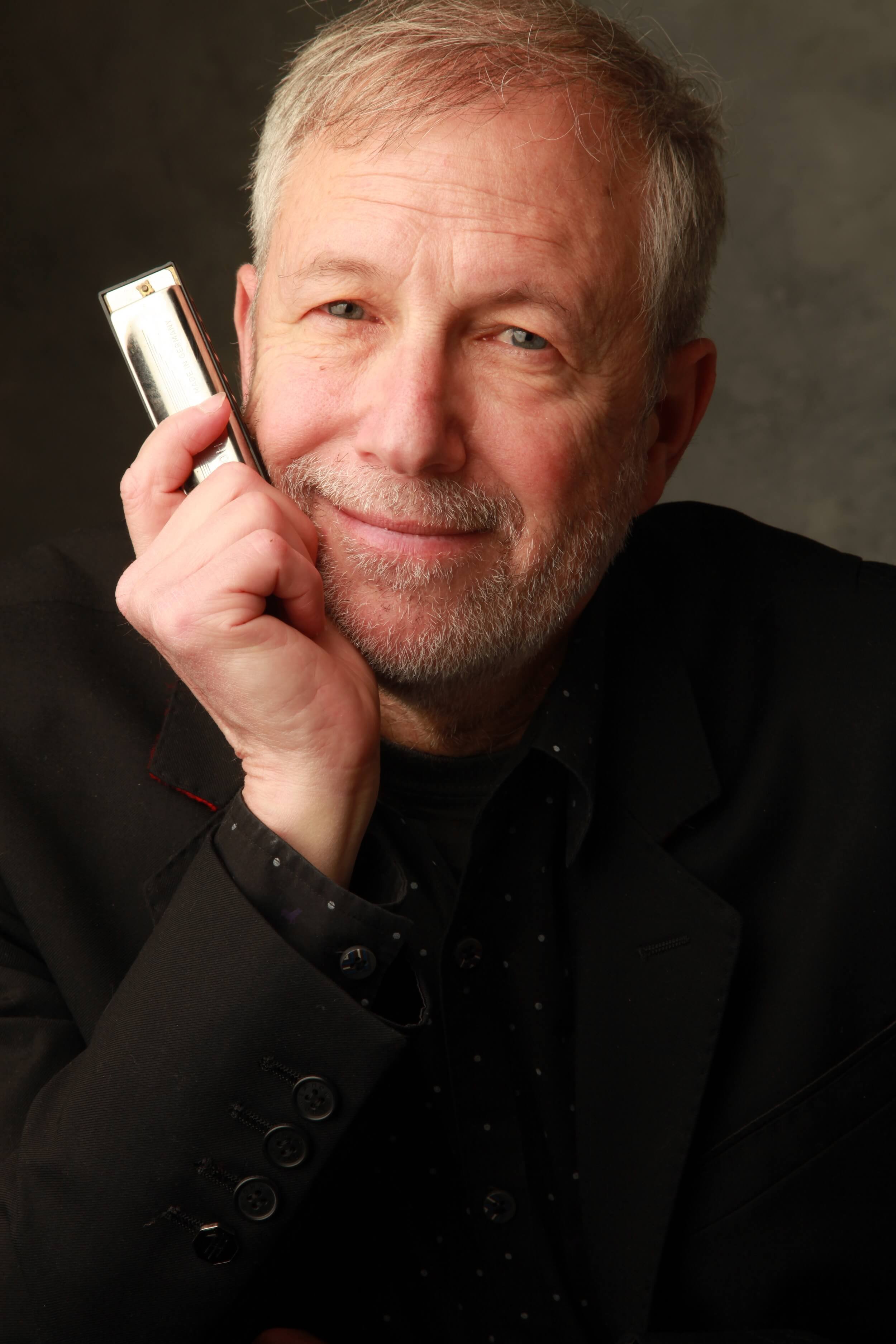
THE CHAMBER MUSIC BLUES Corky here. First I talked about how The Blues Stole My Heart, and how I fell in love with the blues in the early 60's. Then I told you how The Blues Stole My Life, which is about how a career in the blues just happend over night, and how I got involved in the blues/classical crossover. Then the Symphonic Blues was approached from the critics perspecitive and covers the historic angle, from the meeting with Seiji Ozawa through the first performances with major symphony orchestras. All this led to commissions for this blues harmonica player to actually compose blues/classical crossover works for symphony orchestras - like the National Symphony and the San Francisco Symphony. This in turn led to the inspiration for Chamber Blues. In many of the same ways, like the good fortune and hapenstance of the previous stories, making a career out of juxtaposing blues and classical was neither my idea nor my fault. In 1975 I was asked by the San Francisco Arts Commission to compose a set of blues/classical compositions for the San Francisco Symphony for a 1976 performance at the 6,000 seat Civic Auditorium in San Francisco. I was also to be guest soloist. But I was just a blues harp player who only had a basic understanding of music theory. And I never wrote many notes of music on a piece of paper. I let my friend William Russo do that. But I thought about it. As a blues musician I used to sit around with my band during rehearsals. We'd try to come up with arrangements for our new tunes. We would all come up with ideas and then try them. If they didn't work we would come up with alternative ideas until we found what worked for us. "Trial and Error" is an amazing learning tool that is not easily available to most classical composer - especially symphonic composers. So I knew I had experience in arrangement concepts. because of the "trial and error" I had some understanding of rhythm and melody relationships. Also, like most people in general, I knew what a violin and an oboe sounded like and I knew I could buy a book on orchestration, and I also knew that William Russo who composed "Three Pieces for Blues Band and Orchestra," and "Street Music," would help me if I needed it. So I said "yes" to the San Francisco Symphony and the City of San Francisco. I mean, what did I have to lose? I didn't have a career as a composer that would be in jeopardy. After all, I was a blues musician. So in 1975 I wrote a few symphonic arrangements from songs I had been performing as a solo artist during the beginning of the singer/songwriter phase of my career. I spent a lot of time finding ways of allowing the symphony orchestra to play a major role in the intricasies of the works. I didn't want to use the symphony as just a sweetening or a backdrop. I approached it more like chamber music where each instrument (or in this case each group of instruments) plays an important role in offering a complete picture of rhythm, counterpoint, and melody. The works were conducted by Arthur Fiedler and were a great standing ovation success. Someone in the audience had recorded the concert on their cassette recorder and gave me a copy. I gave a copy of the recording to Dave Kopple who was involved in some management aspects of my career. He played the recording for the manager of the Grant Park Symphony. From this I got a commission to write two more works for both the Grant Park Symphony and the National Symphony. By the way, the concerts at Grant Park and the National Symphony were so successful that I received yet another commission to write a completely symphonic work for a 1991 outdoor concert on the 4th of July for the Grant Park Symphony. The piece was called "Blues for a Green Planet." But it was in 1983 during the composition process of the last pieces for Grant Park and the National Symphony that I had a burst of inspiration - first that juxtaposing classical and blues was indeed my mission. Seiji Ozawa used to tell me that it was important work to bring together blues and classical. It brings people together and it offers a spark to a much stifiled classical music repitoire. He said that I was the one that needed to pursue this. I never pursued it ... but it sure pursued me ... and finally I got it! It was dirty work, but someone had to do it. If I didn't do it, who would? Second I realized that writing for symphony orchestra was just too much work for one blues harp player and that chamber music was the way to go. Third I had the vision of a string quartet. I had the understanding how powerful, intimate, and emotional music is when it is played by a string quartet. With the better quartets there is a great amount of interplay between the musicians - not too diffferent than the blues in that matter. Another inspiration was that at this time in music history we were hearing a lot of synthesizers. The sound of a group with little wooden instruments with a very down to earth sound would be a great alternative to the electronic and synth music of the day. The compositions would explore the mostly unexplored territory of where classical and blues can meet and enhance each other. I heard the two working together without losing the unique qualities of either genre - in other words, presenting a juxtaposition rather than a blend. I wondered for a split second about percussion. Then I saw and heard the Tabla. The Tabla is an East Indian classical instrument played with one's fingers that also offers a sweet wooden sound - perfect company for the sweet wooden sounds of the string quartet. I also had the inspiration that this was an opportunity to follow the suggestion of the great ones that say we should be working from the heart. Now I needed to find out what this was really about. I realized this was not so easy. First we tend to "fall for the opinions of others" something a great teacher of mine warned me against. So rather then getting in the whole psycology of explaining my process, let me just say that my process was to do whatever I could and whenever I could to fearlessly follow my experience of inspiration and just go wherever it took me. It took me to Chamber Blues. All these combined inspirations and visions came as a flash in one instant. I was knocked off my feet and I was covered with goose bumps. For a lifetime we can search for "the right thing." Then in a flash it finds us. I asked my wife if it would be ok ... after all it would change our life. I began writing the first Chamber Blues pieces (Opus 6, 7, and 8) in 1983 and completed enough material to begin performing in 1987. Our First Midwest Performance Review: CHICAGO TRIBUNE REVIEW HEADLINE: CORKY SIEGEL'S BLUES COME UP ROSEY - 1988 By Howard Reich While the Chicago Theater struggles to survive, another former movie palace scored a resounding triumph over the weekend. Certainly no one in the nearly sold-out Paramount Arts Centre in Aurora could have missed the irony of Saturday evenings season opener. Here, in tiny downtown Aurora, an exquisitely restored theater was enjoying a two-fold success: the prestigious, Midwest premiere of a large new work by blues artist Corky Siegel, and a huge, lively audience to welcome it. What do the folks at the Paramount, which was kicking off its 11th season, know that their counterparts at the now-dark Chicago theatre dont? For one, they clearly have a knack for clever and adventurous programming. Siegels new Chamber Blues show, for instance, was a big hit when it bowed in Colorado earlier this year, and his longstanding reputation as a charismatic Chicago performer made the evening a natural for any local impresario shrewd enough to book it. Beyond that, the very nature of "Chamber Blues which, as its title suggests, fuses classical chamber music and blues traditions seemed sure to draw a wide spectrum of listeners. Little wonder, then, that the Paramount drew as many music lovers in tie-dye shirts and jeans as three-piece suits and glittering gowns. As for the music, it turned out to be all it was promoted to be, and then some. Siegel who obviously relishes playing to a crowd, has the personality, as well as the musical technique, to bring blues idioms into the legitimate concert hall. That he can do so with such ease and so little pretension argues strongly for the quality of his work. ... If anyone doubted the musical depth of urban blues, this evening held it up to close inspection and proved it irresistible. Blues fans might wonder whats the purpose of having four tuxedoed string players attempting to vamp on their refined instruments. But when the Consortium Quartet [eloquently led by violinist Arnold Roth] stepped up to their mikes and had at it, the results were no less persuasive than, say the jazz violin playing of Stephane Grappelli. And that's the story. Chamber Blues continues to have a healthy career of breaking down walls, opening hearts, and bringing people together. It has steeped this musician in a musical experience that completely carries me away. At this writing I continue to pursue Chamber Blues. Chamber Blues also collaborates with guest artists like jazz harmonica wizard Howard Levy, members of Siegel-Schwall like Sam Lay and Rollo, or the whole Siegel-Schwall band, R & B singer Marcy Levy (Marcella Detroit) and other sit ins like Sugar Blue and and Eddy Shaw. I continue to perform with Siegel-Schwall, and the new entity that just "happened" to me; The Chicago Blues Reunion. With these three projects, symphonic performances, and solo singer/songwriter performances, with three new products on the market, and self-managing most of this, I can honestly say for a guy of 62 who was planning on settling down ... best laid plans. |
|
|
|
| Copyright 2008 by Corky Siegel | Home Page: www.chamberblues.com |